Jewels that become heirlooms.

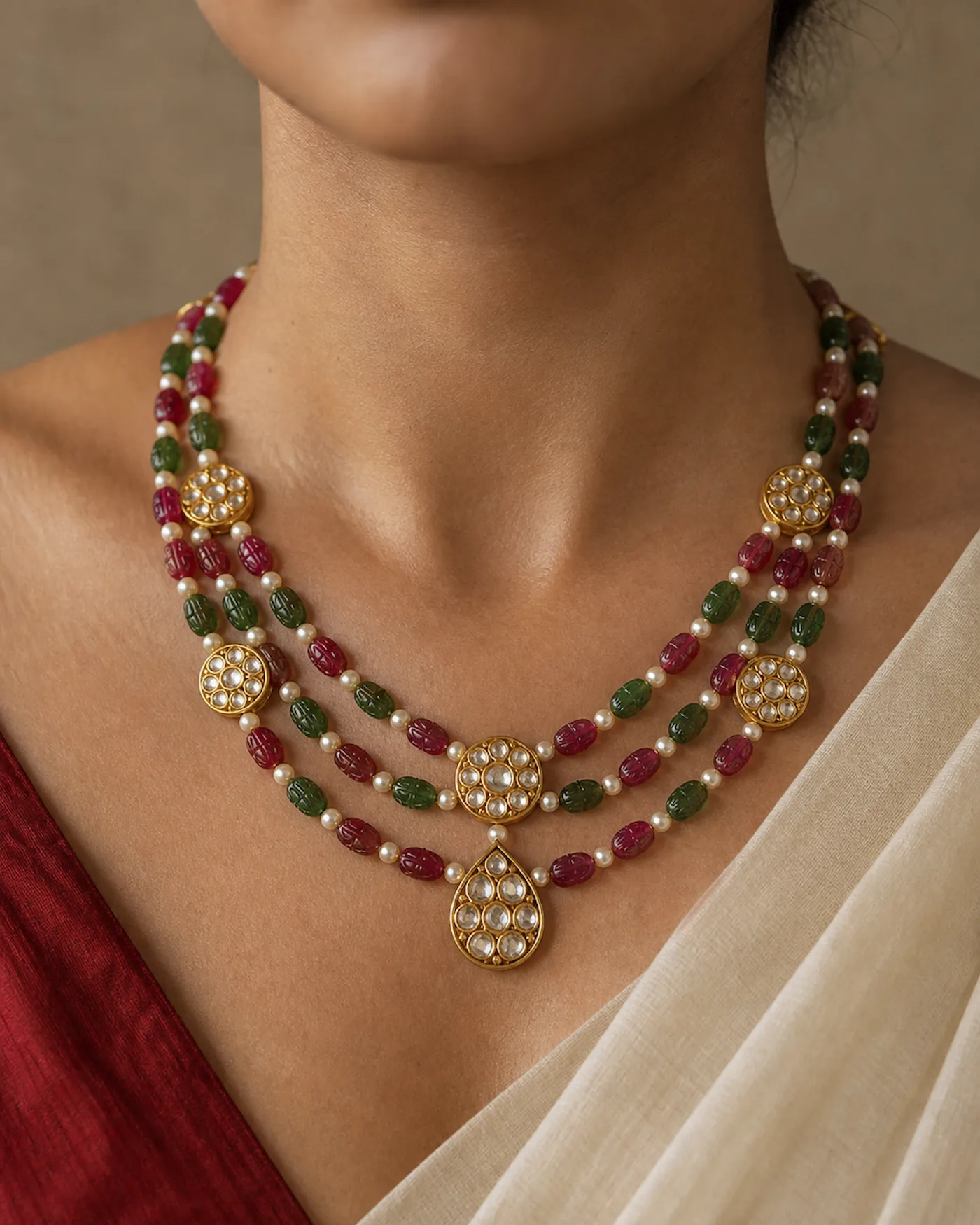
The rani haar worn: three strands falling below the collarbone with the drop at the centre

The rani haar, worn.

The front is what the room sees. The back is often enamelled, and only the person wearing it knows it is there. Where a back has been photographed, it is shown here too.

See the pieces

In the shop now.

Five pieces from the counter, each one of a kind. They are priced on request, so ask to see any of them.

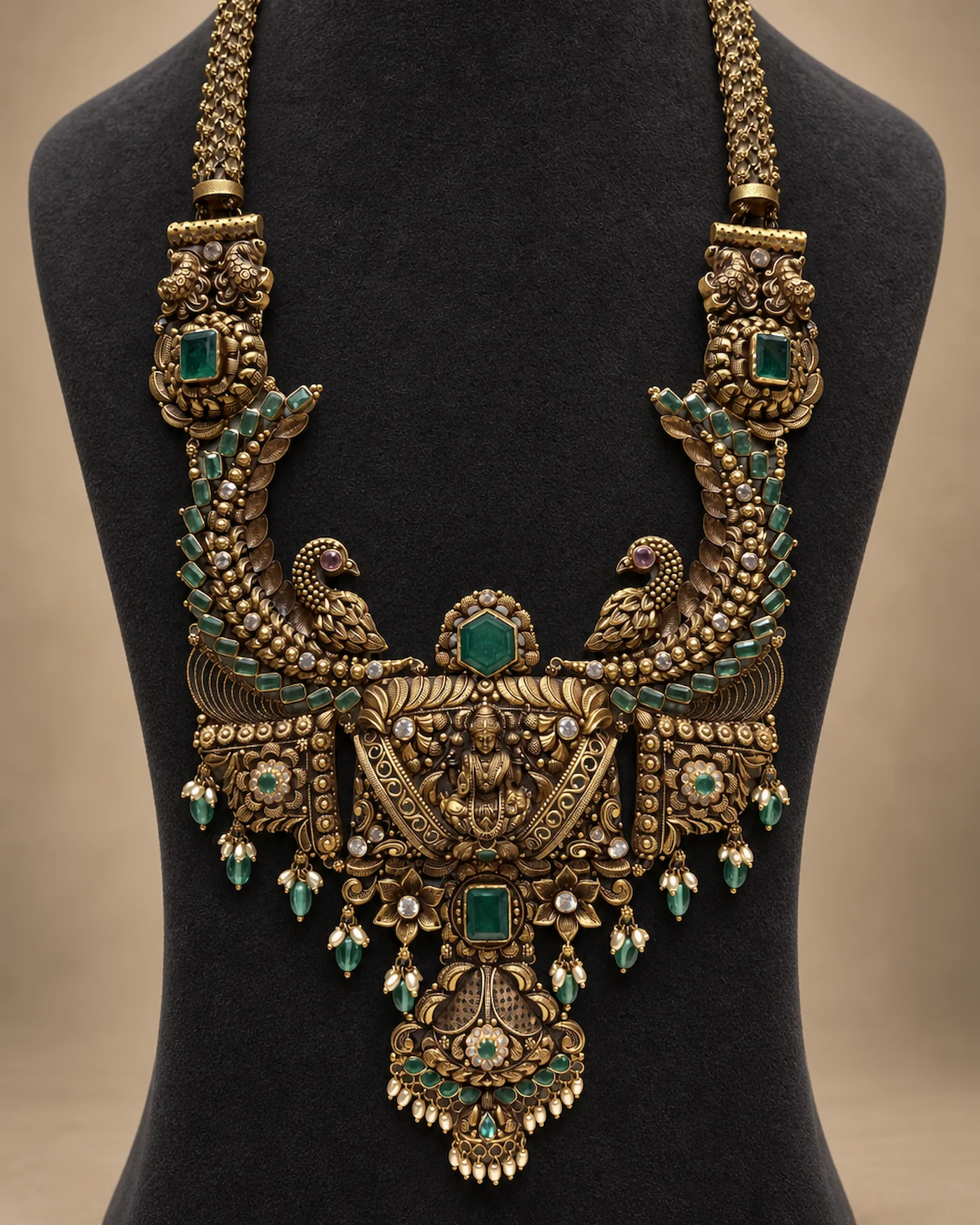
Long antique gold temple haar with two peacocks, rows of green stones and a seated figure at the centre, on a black velvet bust

Peacock temple haar

Antique gold · green stones · pearl-finish drops

Two peacocks meet over a seated figure, with a six-sided green stone set above it.
Something else in mind?

Bridal sets and one-off commissions start with a conversation rather than a catalogue. Tell us what the occasion is and we will show you what is possible.
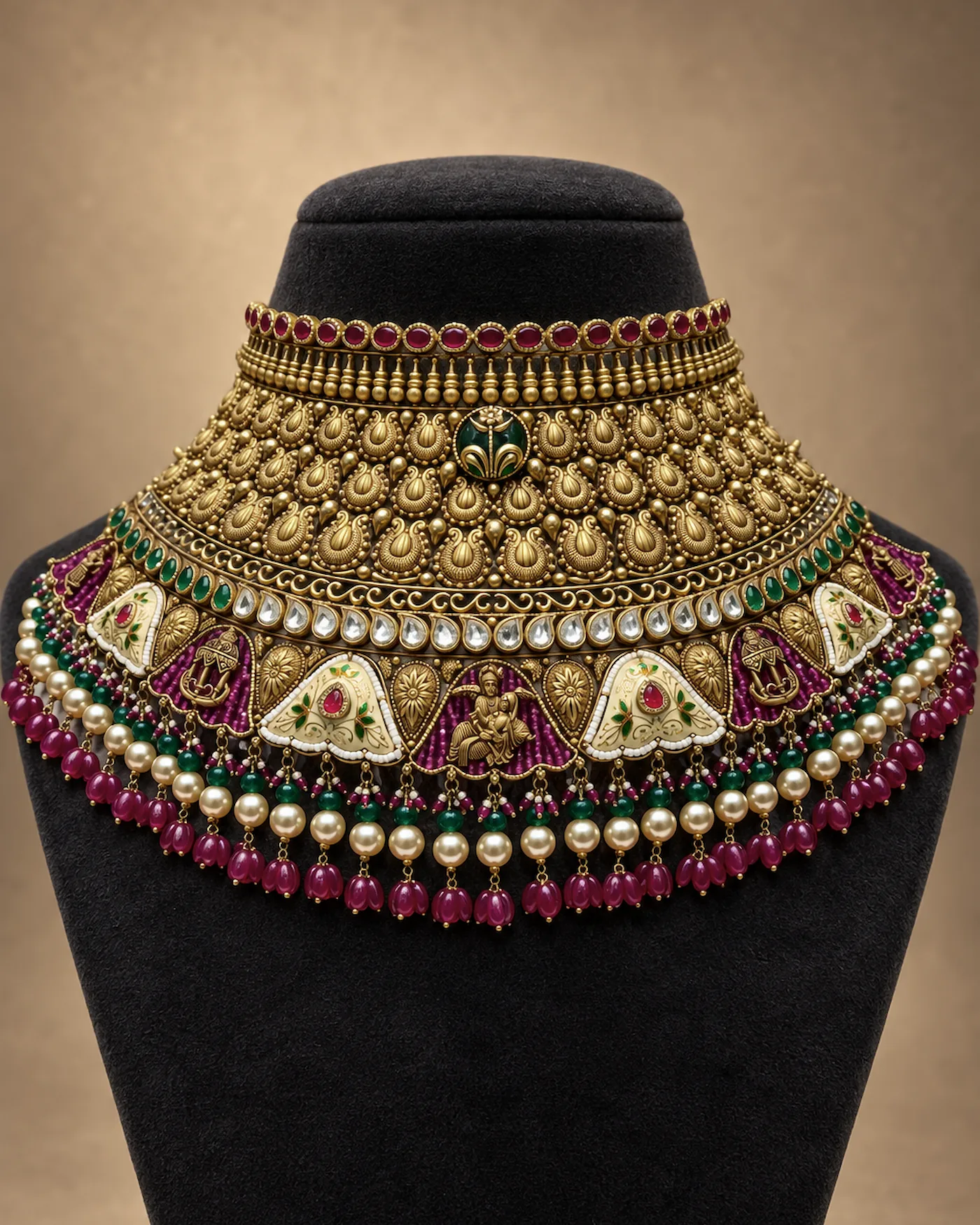
Bridal antique gold choker with a row of red stones, a kundan row, cream enamelled panels and a long fringe of red and pearl-finish drops, on a black velvet bust

Meenakari bridal choker

Kundan row · enamelled panels · pearl-finish drops

A kundan row and red stones over a field of gold paisley, then enamelled panels and a long fringe.
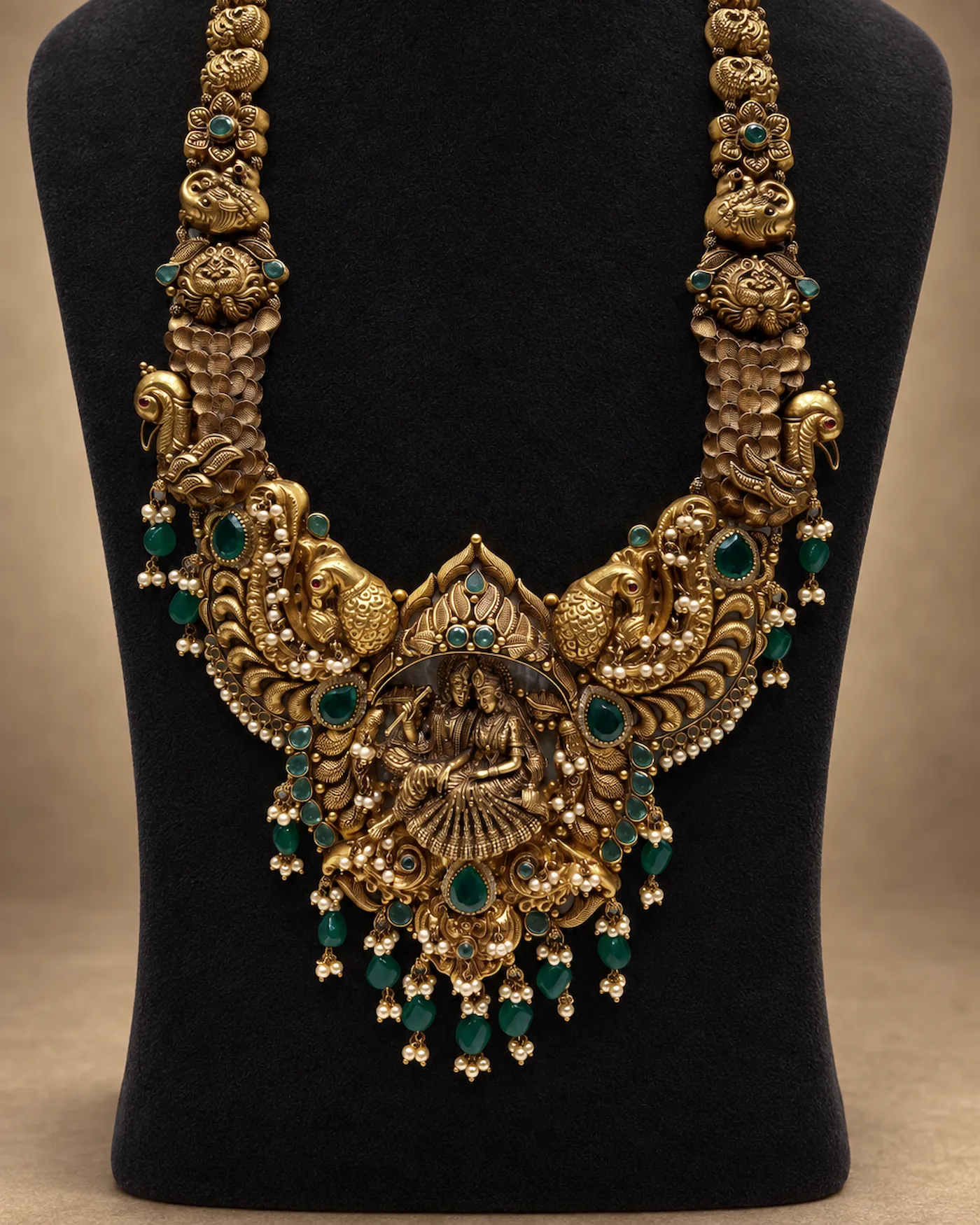
Long antique gold temple haar with a parrot at each shoulder, green stones, and two seated figures at the centre, one holding a flute, on a black velvet bust

Parrot temple haar

Parrots at the shoulders · green stones · pearl-finish drops

Two seated figures at the centre, one holding a flute, under a crown set with green stones.
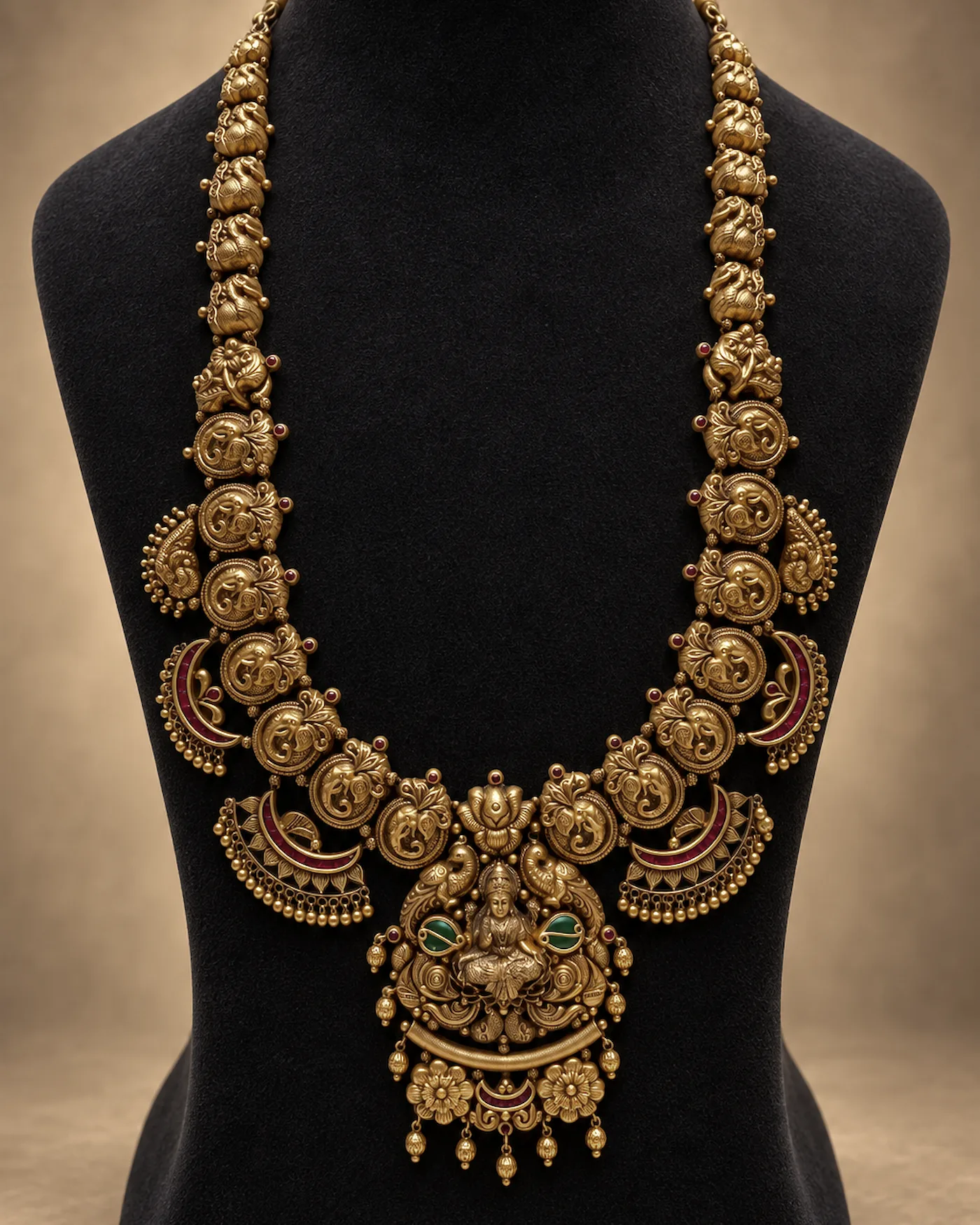
Long antique gold haar of embossed medallions, with red-set crescents at the sides and a seated figure on the pendant, on a black velvet bust

Medallion temple haar

Embossed gold medallions · red-set crescents

Every link is its own embossed disc, and the pendant carries a seated figure between two green stones.
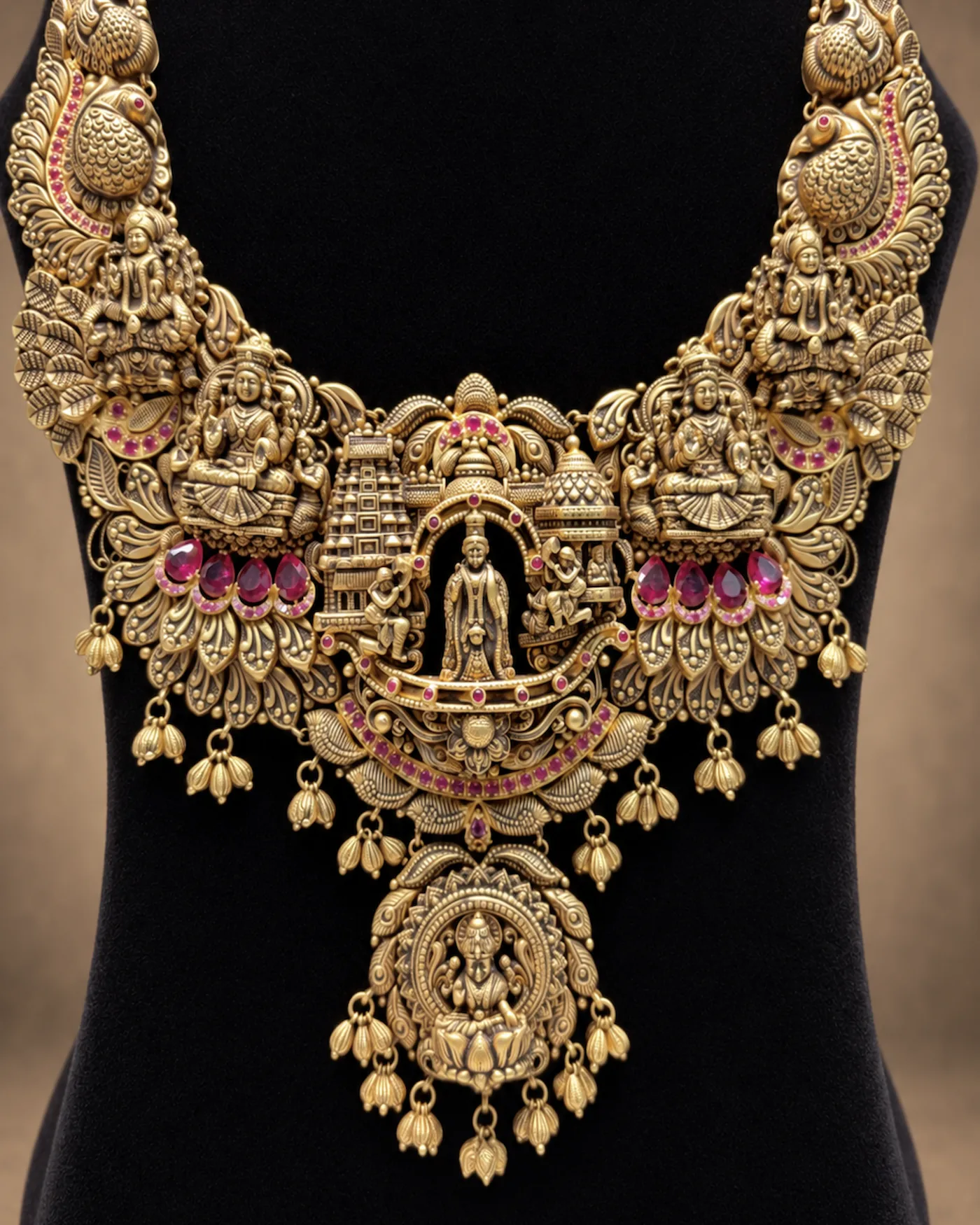
Heavy antique gold temple necklace with a standing figure under an arch, seated figures on either side, red stones and gold bell drops, on a black velvet bust

Temple arch haar

Red stones · gold bell drops

A standing figure under a temple arch, a seated figure on either side, and gold bells along the lower edge.

The part with no audience.

In Jadau and Polki work the back of a piece is enamelled: opaque green, red and white meenakari fired into gold that nobody but the wearer will ever see.

Lotus meenakari on the reverse of every roundel

It is the half of the craft that cannot be sold on sight, which is exactly why it tells you the most about who made the thing.

You should not have to take our word for the side you cannot see.

On, rather than under glass.

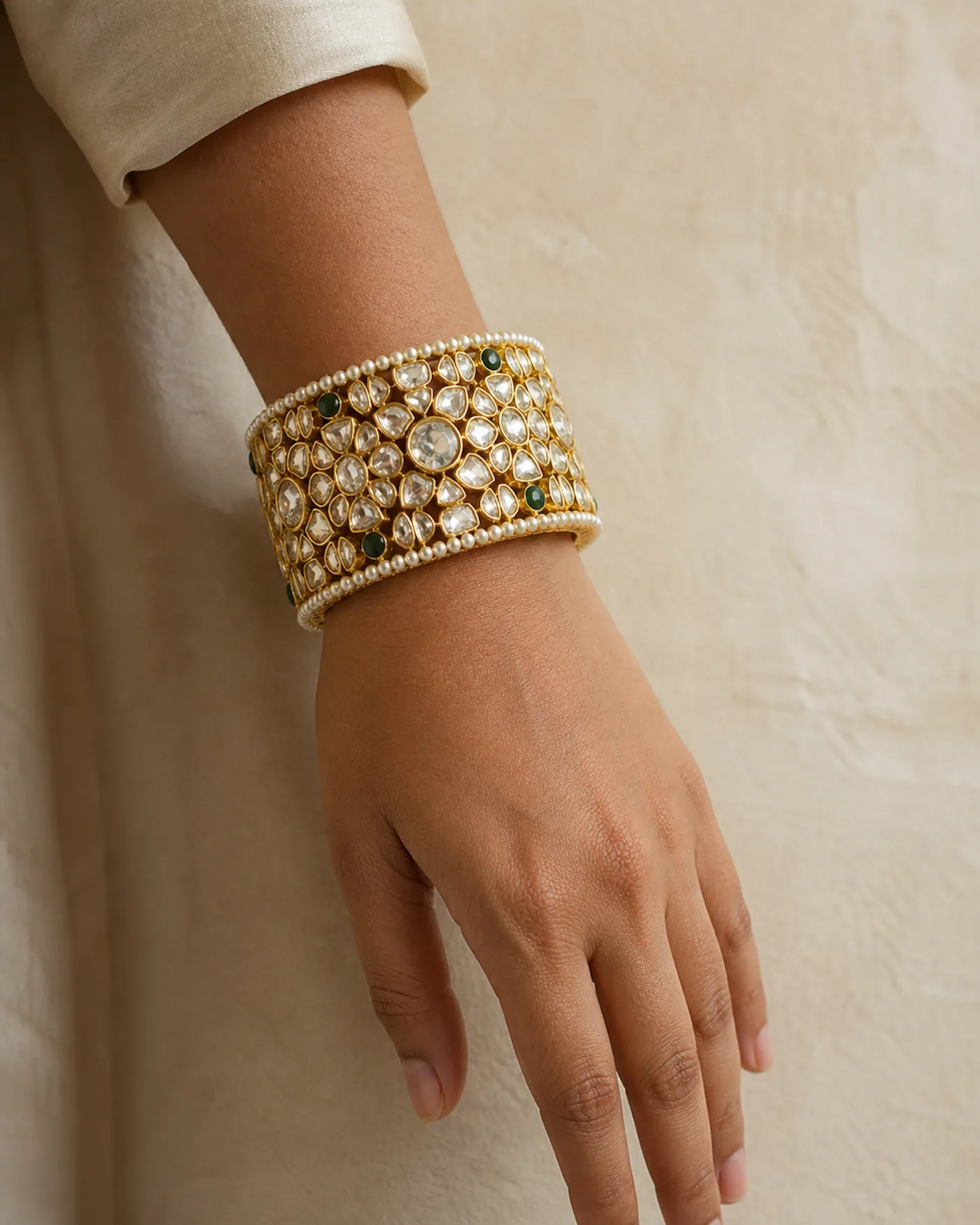
A piece photographed alone has no size. These are the same pieces on a person, which is the only honest answer to how they will sit on you.
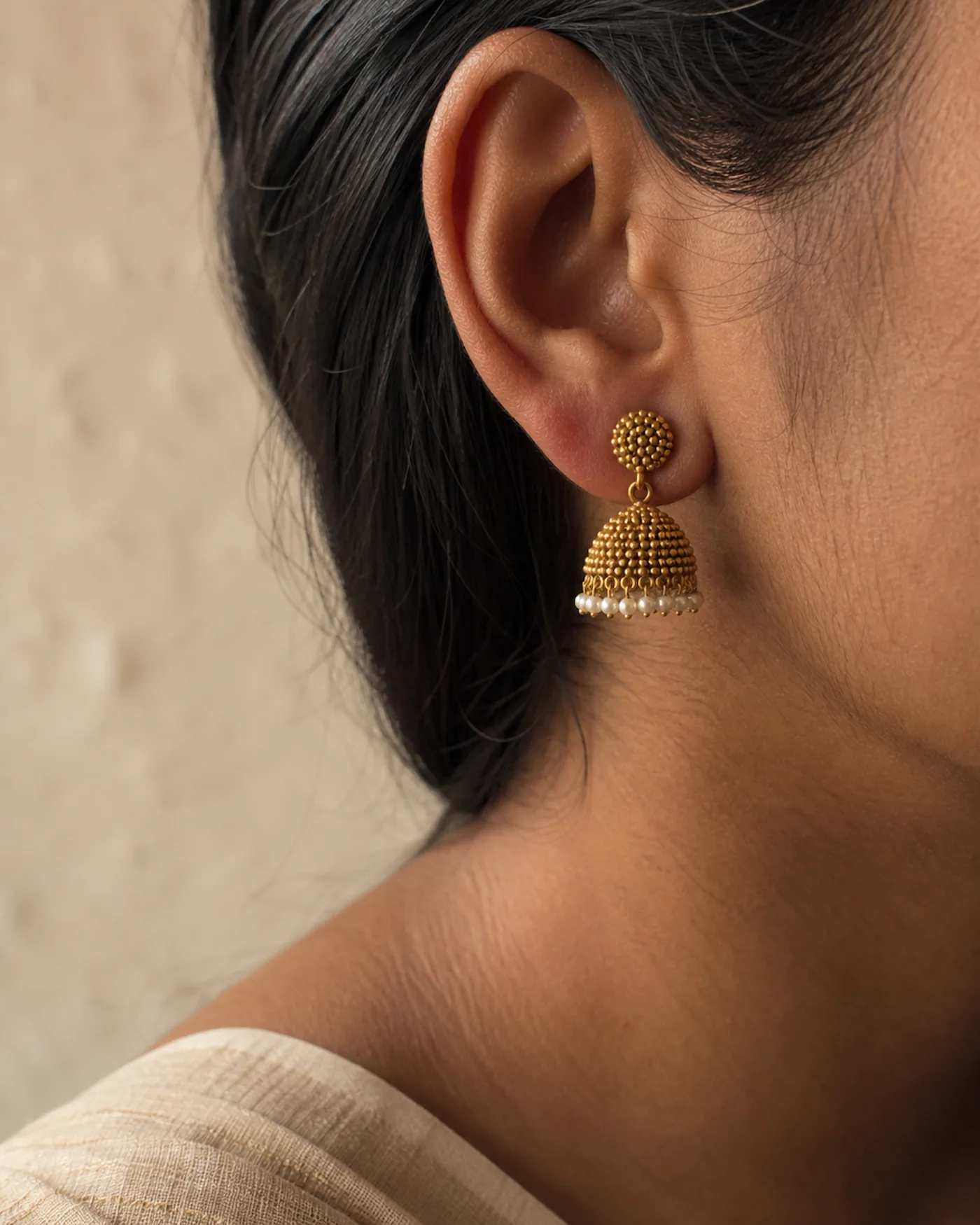
  • A small gold jhumka with a seed-pearl fringe, worn in the ear
    Gold jhumka. Small enough for a working day.
  • A wide jadau kangan set with uncut polki, worn on the wrist
    Jadau kangan. The width is the point.
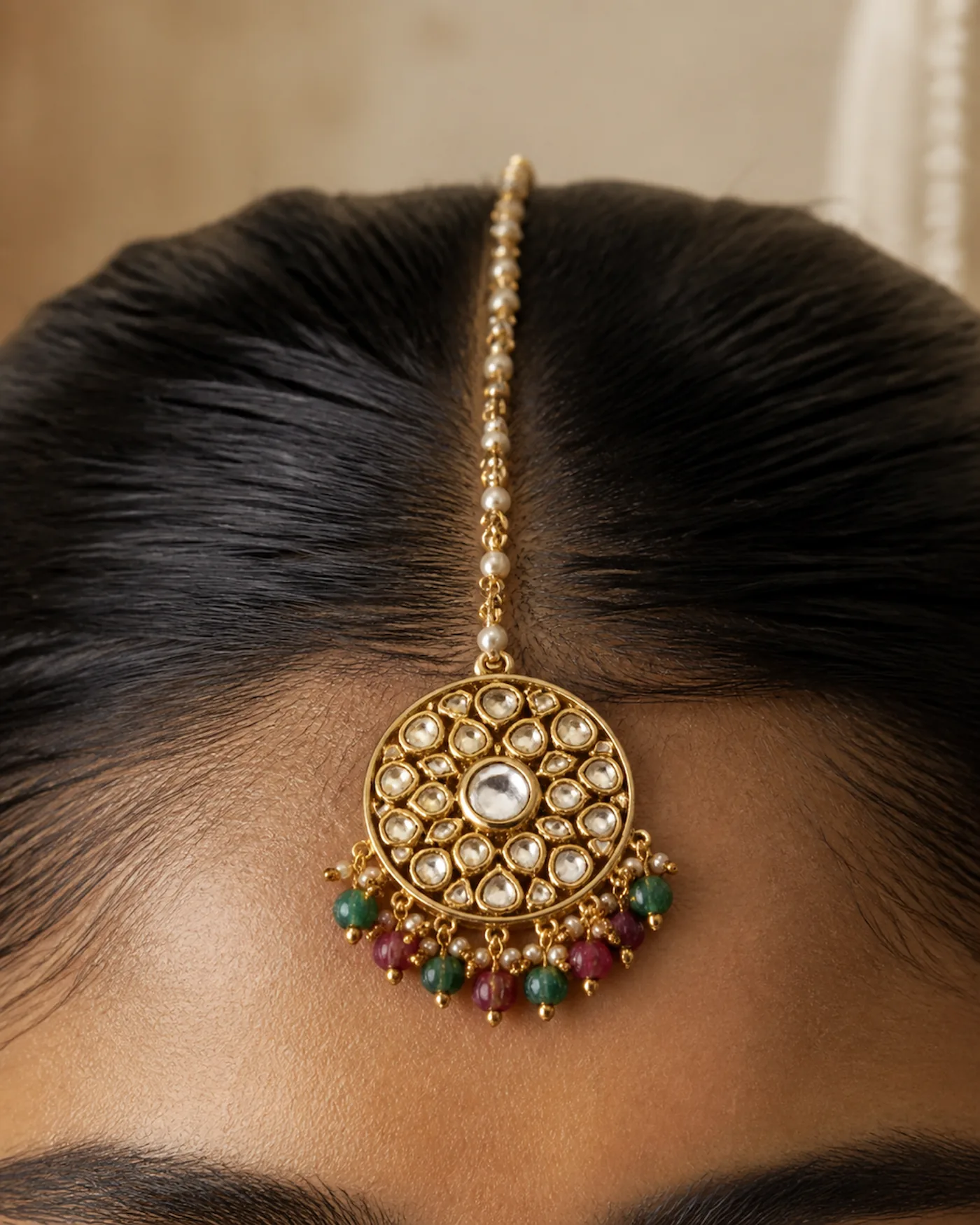
  • A bridal maang tikka resting at the hairline, its chain over the parting
    Bridal tikka. It sits where the parting starts.

Made slowly. Worn forever.

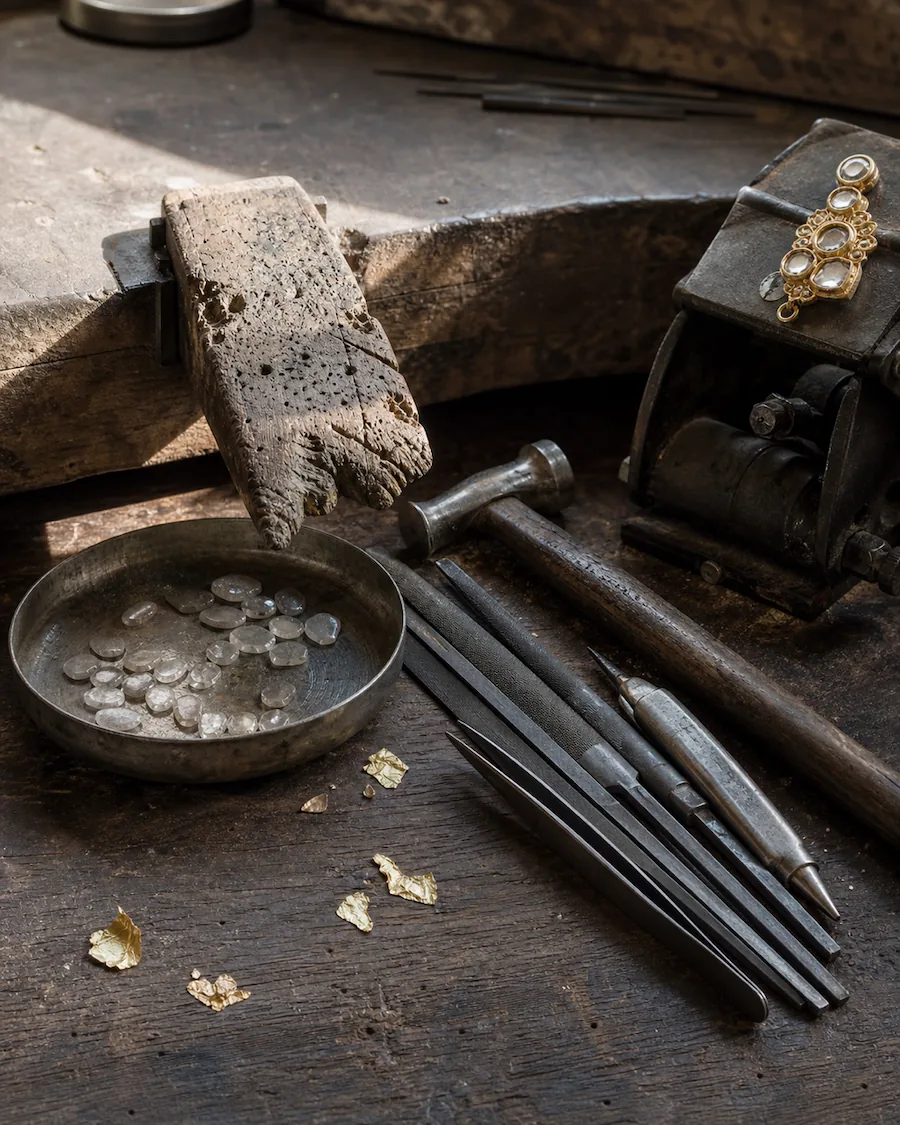
A jadau setting is not claw work. The stone is bedded into shellac and the gold is worked up around it in thin foil, one stone at a time, until the metal closes on the girdle by itself.

The enamel goes on before any of that, because it has to be fired hot enough that no stone could survive it. Which is to say: the back of the piece is made first.
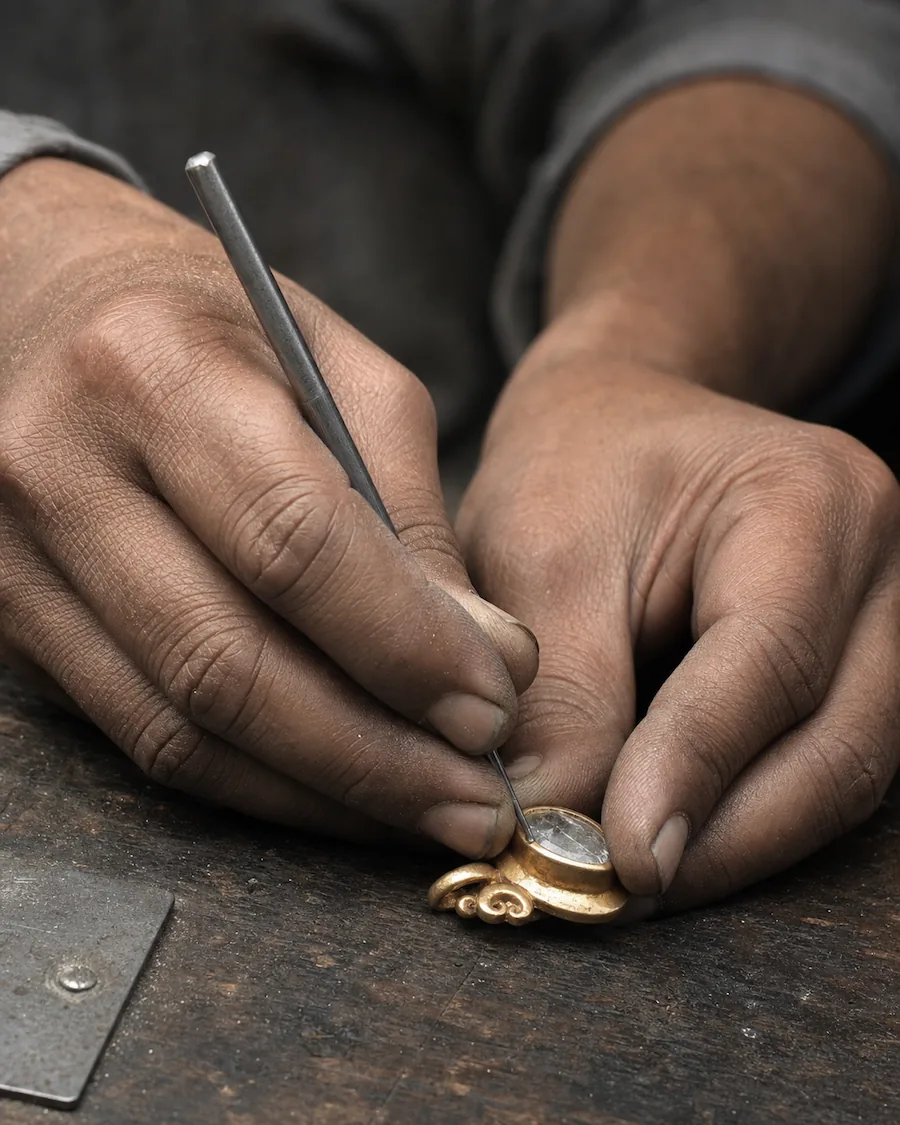
Two hands at a wooden bench, setting a rose-cut stone into a gold bezel with a steel tool
Closing gold around a rose-cut stone, by hand, at the bench.

One date, and no mythology.

Alankar has been setting stones by hand since 1980. Everything else a jeweller usually writes on a page like this (heritage, integrity, generations of trust) could be said by anyone and checked by no one, so here is only the part you can check.

The people who have run the counter since then have their own page, because a family business is a list of people before it is a list of claims.

Meet the people behind the counter

Founded

1980

Techniques
Jadau, Polki and Kundan, set by hand
Every piece
Shown as it is, with the reverse wherever it has been photographed
How to buy
In the shop by appointment, or by enquiry here. Checkout takes no payment, and no piece is priced yet, so nothing can be ordered today.
A jeweller's bench with a dish of uncut stones, files, tweezers and a part-finished gold pendant

A private experience, on your own time.

Pieces are seen in the inner salon, away from the counter, with someone who can tell you where a stone came from and what the back of it looks like before you turn it over.

Come and see them in person.

Details pendingThe phone and WhatsApp numbers below are live. Please use them. We have not published a street address, opening hours and an email address yet, and rather than print a guess we have left those lines open until the shop confirms them.

Call or WhatsApp

+91 81303 86551

Speak to the family directly, or send us a message and a photograph of the piece you have in mind.

Message us on WhatsApp

The salon

PendingWe have not published the street address yet.

Private viewings are held in the inner salon, away from the counter.

Call or message us and we will send you the directions.

Opening hours

PendingNot confirmed yet.

The shop has not given us its hours, and an approximate one sends somebody to a closed shutter. Call before you set out and we will tell you when we are open.